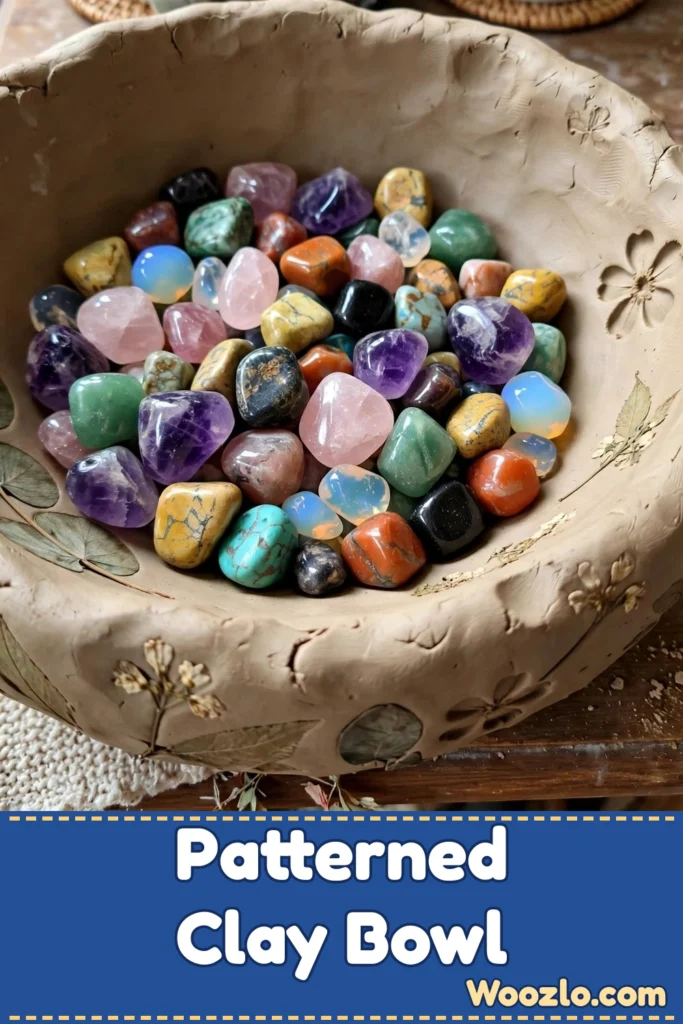
Craft Your Own Stunning Patterned Air Dry Clay Bowl Today
There’s something deeply grounding about working with clay — the cool, pliable squish of it, the soft rustle of parchment paper underneath, the way it responds to your touch. This patterned air dry clay bowl is a cozy, mindful project: simple tools, slow steps, and a finished piece that’s both useful and beautiful.
The best part is how personal it becomes. The patterns you choose can evoke memories, reflect your mood, or simply delight in their design. Press in stamps, fabric textures, or leaves — every bowl is one of a kind. And it takes just a few hours to a full day of drying, depending on your climate.
Materials You’ll Need
- Air dry clay (easy to find at craft stores)
- Rolling pin (or a smooth bottle)
- Parchment paper (for easy cleanup)
- Texture tools (like stamps, fabric, or leaves)
- A cutting tool (such as a knife or a plastic scraper)
- Water (to smooth edges)
- A bowl or mold (optional, for shaping)
Step 1: Soften the Clay
Begin by softening your air dry clay. Knead it gently with your fingers until it feels warm and malleable, letting any initial stiffness melt away.
Step 2: Protect Your Surface
Place the softened clay onto a sheet of parchment paper. This keeps the clay from sticking to your work surface and makes cleanup easier.
Step 3: Roll It Out
Roll out the clay with your rolling pin to about a quarter-inch thick for a sturdy bowl — but feel free to experiment with different sizes and thicknesses.
Step 4: Trim the Shape
Use a cutting tool to trim the rolled clay into a circular shape. Go for a classic round bowl, or any shape that speaks to you.
Step 5: Add Texture
Now for the fun part: press your texture tools, leaves, or fabric into the clay. Watch how these marks add character and depth to your design.
Step 6: Shape the Bowl
Gently lift the circle of clay from the parchment. If you’re using a bowl or mold, place the clay over it and let it take shape. You can also leave freeform edges for a more natural look.
Step 7: Smooth the Edges
Use a small brush or your fingers dipped in water to smooth the edges and surface. The water transforms the texture into a softer finish.
Step 8: Let It Dry
Let your bowl sit undisturbed in a safe place. Drying takes anywhere from a few hours to a full day, depending on your climate — overnight is a good practice. Once dry, you can paint or seal it to enhance the colors.
Enjoying the Finished Piece
Use your bowl to hold treasures — keys, stones, delicate jewelry, small notes worth cherishing. Each time you reach for it, appreciate the texture, the coolness of the clay, and the intention behind its creation.
Care and Refreshing
Store the bowl in a cool, dry place, away from direct sunlight and excessive moisture, which can weaken the structure over time. Small cracks can be repaired with a bit of water and extra clay — blend the edges smooth. To refresh the look, simply paint over it or add new patterns.
Tips and Variations
- Play with color: Paints or finishes bring a new dimension — natural earth tones or vibrant splashes that reflect your mood.
- Mix patterns: Use two or more textures in one bowl, or create gradient effects across sections.
- Create a set: Make a few bowls at once, each with its own texture or shape, for a lovely table display.
- Incorporate natural elements: Press small stones or twigs into the clay for added depth and organic flair.
- Gift them: Handmade items carry a special warmth — each bowl holds a piece of your heart.
Quick Questions
How long does the clay take to dry? Generally a few hours to a full day, depending on your environment. Leaving it overnight is a good practice.
Can I paint the bowl? Absolutely — once dry, paint with acrylics or clay markers, and consider a glossy finish for a vibrant look.
Is air dry clay food-safe? Most air dry clays are not food-safe. If you want to hold snacks, seal the bowl thoroughly with food-safe sealant first.
What if my bowl cracks while drying? Don’t worry — small cracks can be repaired with a bit of water and additional clay, blended smooth.
Can I use something else as a mold? Yes — bowls, cups, or any curved shape. Let your imagination guide you.