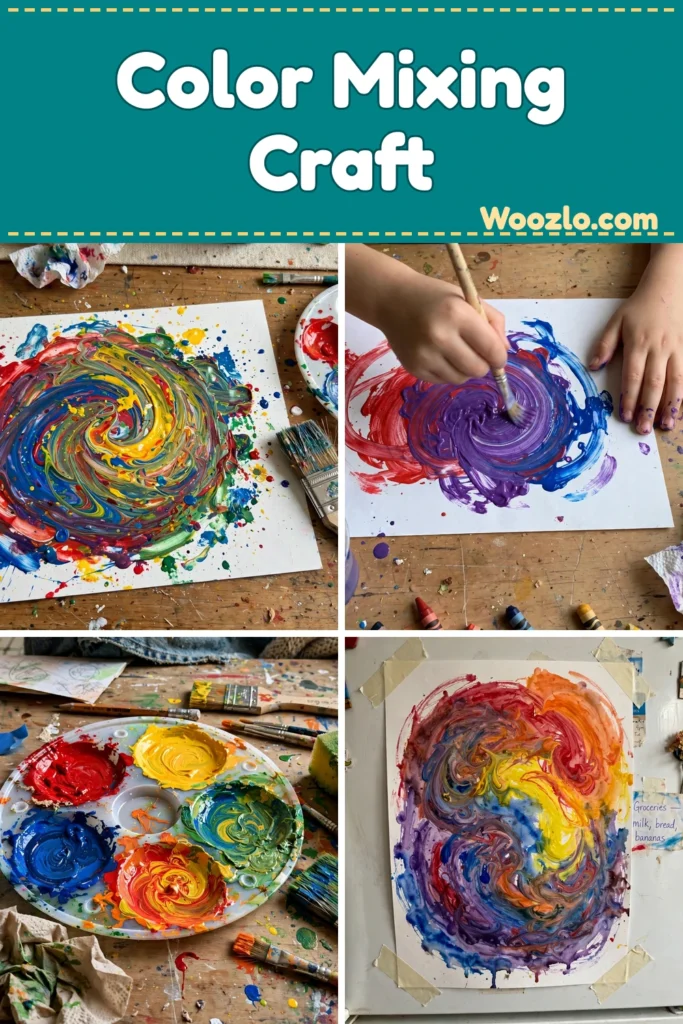
Try a Color Mixing Craft for Kids
Red, blue, yellow — and then the magic begins. This color mixing craft for kids is all about the joy of discovery: swirl two colors together and watch a brand new one appear. It’s part art lesson, part sensory play, and entirely fun.
You need almost nothing to start — just washable paints, brushes, and thick paper. Plan for about an hour of making plus drying time, and let your little one lead the way. There’s no wrong answer here, only happy surprises.
What You’ll Need
- White cardstock or thick watercolor paper
- Water-based paints in primary colors (red, blue, yellow)
- Paintbrushes in various sizes
- A palette or paper plates (for mixing)
- Small containers with water (for cleaning brushes)
- Paper towels (for dabbling and drying)
- Optional: sponges, droppers, or old toothbrushes (for fun effects)
Step 1: Prepare Your Space
Lay out materials on a clean table with plenty of room to work freely.
Step 2: Squeeze the Primaries
Squeeze small pools of red, blue, and yellow paint onto the palette.
Step 3: Make the First Stroke
Dip a brush into the first color and press it onto the paper — the first stroke!
Step 4: Experiment with Mixing
Swirl a different color where the first one sits and watch them blend into new shades.
Step 5: Explore Techniques
Use a sponge to dab for texture or a dropper to add water for softer blending.
Step 6: Let It Dry
Set the artwork aside in a safe place to dry — colors deepen as they settle.
Step 7: Celebrate the Masterpiece
Display it proudly — a fridge gallery, a wall, or a shelf — and celebrate the creative journey.
Tips from My Workbench
- Try different tools: Toothpicks, sponges, even fingers yield delightful textures.
- Go natural: Use flowers, leaves, or fruits to make natural dyes.
- Themed journeys: Focus on an emotion or season and choose colors to match.
- Host a mixing party: Invite friends — shared creativity is the best kind.
- Keep exploring: Let kids move past primaries into secondary colors and beyond.
Good to Know
Ages: great for ages 3 and up; tailor complexity for older kids. Mess worry? Use table covers and old clothes — or take it outside. Time: about an hour of making plus drying. Paint types: water-based is easiest to clean; acrylic or homemade natural paints work too (plan cleanup accordingly). Leftover paint: store in airtight containers or mix into new projects — nothing wasted.
Source inspiration: rinarecipes.com — a color mixing craft for kids.